As reported in Andrea Strong's Substack, Michael Brafman had a sandwich shop that didn't survive its first partnership. He spent months after that looking for a kitchen willing to let him build something new, and kept hitting the same wall that stops most people trying to open something small on the Lower East Side: no space, or the wrong lease, or a landlord who wanted a restaurant-sized commitment for a sandwich-sized idea. Then a beer distributor mentioned a bodega on Stanton Street. It had a full deli grill nobody at the store particularly wanted to keep running. Brafman took one look and knew it was the answer he'd been chasing.
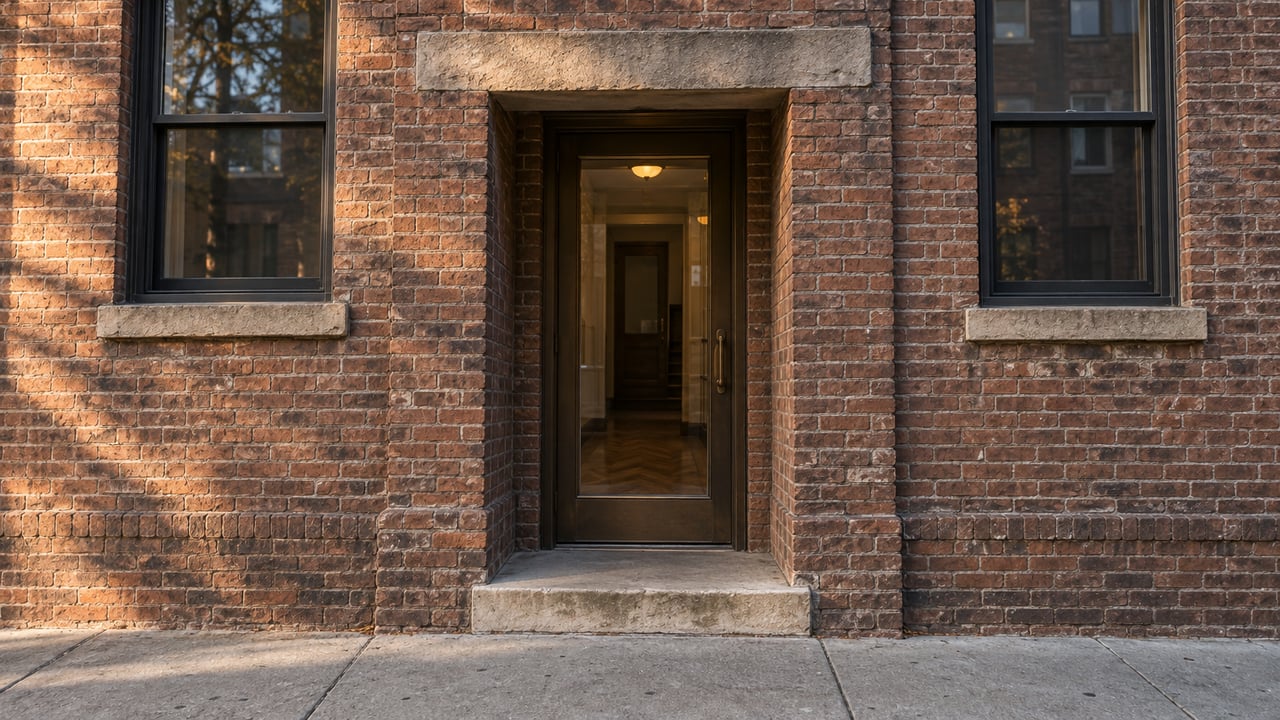
That bodega is now The Boring Sandwich, at 97 Stanton Street, serving a menu that is anything but its name. Breakfast sandwiches run until 5 p.m., including a Japanese-style egg salad on challah and a chivito piled with steak, ham, bacon, egg, and salsa rosada. After 5, the counter shifts to all-day builds like a New Orleans-style muffuletta and a crispy chicken cutlet sandwich stacked with shredded cabbage. None of that is the interesting part. The interesting part is that the whole operation exists because a working bodega deli was sitting there, unclaimed, waiting for someone to walk in and say yes.
A Pattern, Not a Coincidence
That's not an isolated story this season. Look at what actually landed on the Lower East Side in September and a shape starts to repeat: the neighborhood's most talked-about fall moments keep happening in space that already existed for something else, repurposed for a few weeks, a weekend, or in one case, two days.
This matters if you live here, because it changes how you should think about "what's new." A lot of neighborhoods measure newness in construction cranes and lease signings. This fall, the Lower East Side is measuring it in old storefronts doing new jobs.
Two Days on Ludlow Street
The clearest example ran and ended before most people even heard about it. On September 19 and 20, Oatly and Korean-American artist and producer Yaeji took over a storefront at 48 Ludlow Street and turned it into Cafe Yaeji, an immersive pop-up built around the Korean dabang, the tea and coffee houses that were once gathering spots for Korean artists, writers, and musicians. For two mornings, 9 a.m. to 3 p.m., the space served free Gochujang Lattes: espresso, Oatly Barista Edition, a gochujang-vanilla base, salted vanilla cold foam, and a dusting of gochugaru.
The café is already gone. What's left is worth noting anyway, because starting September 21, Tous Les Jours locations across the Northeast are rolling out their own version of the drink through October 31. The Lower East Side got the idea first, in a rented storefront for two days, before it became a chain menu item anywhere else. That's the neighborhood's usual role: the place where something gets tested in borrowed square footage before it goes anywhere permanent.
The Mezzanine Does Double Duty
Essex Market runs on the same logic, just on a longer timeline. The market itself has served the neighborhood in some form since 1818, and its current home inside Essex Crossing includes a Mezzanine that functions as event space when it isn't hosting cooking demos or record store meetups. On September 19, that Mezzanine hosted a Hispanic Heritage Celebration, presented with local community advocate Daisy Paez, bringing free food from vendors Don Ceviche, El Sazón R.D., and Mias Cocina, along with music from Fuerza Latina.
The neighborhood's fall calendar keeps circling back to the same idea. The most interesting square footage on the Lower East Side right now isn't new. It's borrowed, for an afternoon or a season, and then handed back.
The celebration was one date, but it sits inside Hispanic Heritage Month programming that continues at the market through the fall, meaning the Mezzanine will likely host more of this kind of temporary, high-turnout community use before the season's over. A stall-based food hall built out of a historic market is, structurally, one of the more flexible pieces of real estate in the neighborhood. This fall it's proving that by hosting cultural programming, not just lunch.
The Rest of the Fall Menu
Not everything opening right now is about reuse specifically. Some of it is just a genuinely full season for LES kitchens, and worth knowing if you haven't been paying attention to Stanton, Allen, and the surrounding blocks lately.
| Name | Where | What it is |
|---|---|---|
| Xi Hu | Lower East Side | Eastern Chinese, focused on Jiangsu, Zhejiang, and Shanghai cooking, including dongpo pork and Huaiyang-style eel |
| Hoy! | Lower East Side | Filipino spot currently in soft-open mode, serving calamansi lemonade and ube lattes with condensed milk, full cocktail menu coming later this fall |
| Iara | 205 Allen Street | Modern Brazilian from chef Vitor Mendes, drawing on Amazon ingredients for dishes like tucupi broth with butter beans |
| After Eden | Lower East Side | Cocktail bar pairing Vietnamese coffee by day with Southeast Asian-inspired drinks at night |
| Tin's | Lower East Side | Cocktail bar serving food from a chef with a background in Korean tasting menus, including sheng jian bao |
That's five distinct cuisines opening within blocks of each other in a single season, which says something about how dense the LES dining scene has gotten without needing to expand its physical footprint much at all.
Why the Galleries Never Needed a Warehouse
The gallery scene tells the same story from a different angle. Chelsea built its reputation on warehouse-scale spaces. Tribeca has gone in a similar direction with blue-chip flagships on wide blocks. The Lower East Side never did either. Its galleries are packed into narrow storefronts along Orchard, Eldridge, Grand, and Rivington, often a dozen or more within a few minutes' walk of each other, and that density is exactly what makes the neighborhood's art scene function the way it does.
September brought a full slate of new shows into those storefronts. Massey Klein Gallery on Forsyth Street opened a show running through October 24. Miguel Abreu Gallery has Eileen Quinlan. Martos Gallery is showing Dan Asher. McKenzie Fine Art has Pete Schulte's Neither-Nor Stone or Not Not-a-Rock. Spazio Amanita, split between a Bowery and a Rivington address, opened Samantha Jones's Residual Worlds on September 10, running through October 11. Abrons Arts Center on Grand Street has been part of the rotation too. The New Museum's survey of Arthur Jafa anchors the whole stretch as the neighborhood's largest institutional draw.
If you want to see a meaningful slice of it in one trip, mark this Friday, September 25, on your calendar. That evening is After Hours Downtown Gallery Night, when participating galleries across the Lower East Side, Tribeca, and Soho stay open until 8 p.m., which is later than most LES spaces run on a normal week.
A few things make that night worth planning around rather than winging:
- Hours vary more here than in Chelsea's fairly uniform Tuesday-through-Saturday schedule, so check individual gallery pages before you go.
- The blocks are walkable but tight. Plan for more stops covering less physical distance than a Chelsea crawl.
- Starting at the New Museum and fanning out into the smaller storefronts nearby is the most efficient route, since it's the neighborhood's biggest anchor point.
None of this required a single new building. It required storefronts that were already there, doing what LES storefronts have always done: hold something small and specific, then swap it out for the next thing.
What This Adds Up To
Nothing this fall on the Lower East Side depended on new construction. A bodega deli became a sandwich counter. A storefront became a coffee shop for two days and then went back to being empty. A market mezzanine hosted a cultural celebration between its regular programming. A stretch of narrow storefronts kept doing what they've done for years, just with new names in the windows. If you live here, the neighborhood you're walking through this month is the same physical footprint it was in August. What's inside it changed anyway.
If you're the kind of person who notices when a block starts working differently, that instinct is worth something beyond a good weekend itinerary. The Sapir Team spends a lot of time reading exactly these kinds of shifts across Manhattan, because they tend to say something real about where a neighborhood is headed next. If you're ever curious what that means for your own address on the Lower East Side, or anywhere else in Manhattan, book a private consultation and we'll talk through it.